
This Is (Probably) Not World War Three
This war must be opposed, but geopolitical realities do not indicate a new world war.

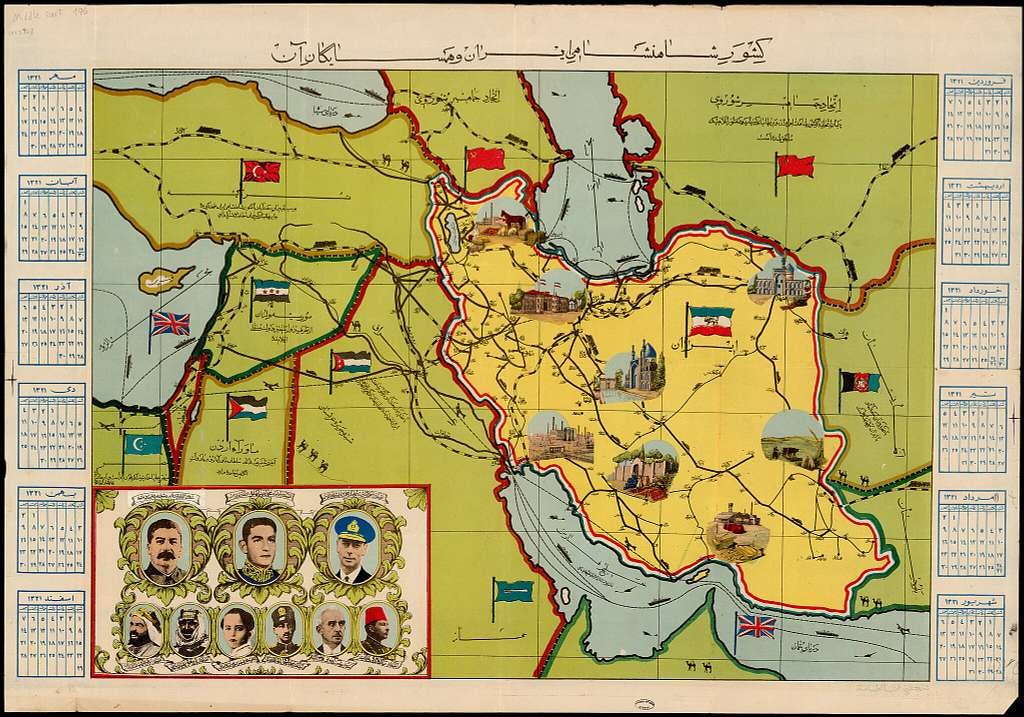
While the US-Israel war on Iran is a criminal tragedy, it is unlikely to become World War III. There are a few missing factors and a couple incorrect assumptions about the state of world. For it to become a world war, powerful countries would have to come in defense of Iran. That is not likely to happen anytime soon.
First we have to understand the scale of World Wars I and II. Both involved several dozen countries—around a hundred countries if you include the vast colonial empires that Europeans drew from—and occurred on multiple continents. This war, though it is already taking innocent lives in Iran, is unlikely to reach the global scale, for many reasons.
Lack of Alliances
In terms of World War I, there have been comparisons between the death of Khamenei and the assassination of Franz Ferdinand and the subsequent invasion of Serbia by Ferdinand’s Austria-Hungary. But there is no series of alliances to be triggered from the US-Israel invasion, aside from those already benefiting Israel’s government.
While the alliances preceding World War I were far from its sole cause, their mere existence illustrates a very different world. Alliances on the scale of the early 20th century were put into place to maintain a balance of power between countries with near equal military capacity. Since the fall of the Soviet Union, there has not yet been a force near equal to the United States in terms of military capacity, though China is challenging that norm.
There are still military alliances, like the Cold War relics of NATO and the post-soviet response to NATO, the Collective Security Treaty Organization (CSTO). There are some new military treaties, but almost none have been tested, and most would involve the United States Navy playing a central role in enforcing them.
The world is slowly exiting this era of near complete U.S. domination, so all of this will likely change in our lifetimes. But in the meantime, let’s focus on Iran.
Iran’s Allies, or Lack Thereof
Iran’s allies are a combination of militias and battered dual power governments (in the sense that they are still struggling for legitimacy against another government) like the Houthis in Yemen. They’ve been deeply weakened by Israel’s invasion of Gaza and a string of assassinations of key leaders. Allied groups in Iraq have spoken about receiving little communication from Iran, and declining support since the fall of Assad’s Syria and the assassination of Qassem Soleimani, who directed Iran’s allies.
Arab governments that might otherwise join a war against Israel have realigned toward the United States and Netanyahu in the last decade, solidified by the Abraham Accords. At best Iran may be able to force them into neutrality by attacking their oil production and plants that transform salt water into drinkable water for their populations.
Russia and China are also often seen as Iran’s allies, but that isn’t quite accurate. They lack the same defensive pacts that led into World War I, and that the United States and most of Europe has through NATO. Defense pacts bind governments to join any war that is waged on their allies. This is of course hypothetical, countries are always weighing conditions, and the world wars involved many countries, like the United States, who were not bound by treaty.
To maintain flexibility under the global dominance of the United States, China does not maintain military alliances, aside from the defense pact it signed with North Korea in 1961.
While Russia has signed a number of defensive pacts, it is not in any sort of formal alliance with Iran. Even if it was, it realistically would not have the capacity to provide much military support due to its own war against Ukraine.
Of course, countries don’t need to be in formal alliances to join in a war, but neither China, Russia, nor any other rising power has an incentive to back Iran.
Commitment Asymmetry
I find the term “commitment asymmetry” useful here. In simple words, the cost of the war against the United States and Israel would not provide enough benefit to be worth it. In even simpler words, the juice isn’t worth the squeeze.
Though China gets a substantial amount of oil from Iran, the energy, diplomatic, and human, costs of the war are unlikely to be worth it. China is a pre-occupied with expanding its economic reach across the world, including Europe. And its military priorities lay within its own region, especially the reconquest of Taiwan, arguably the most strategic location on earth due its monopoly on advanced semiconductors (which play a role in most modern technology).
Russia also benefits from this war almost as much as it is losing. While Iran is an important economic partner and a key supplier of military drones, Russia has an opportunity to recapture the oil and gas deals that it lost by waging war in Ukraine. The United States has pressured countries in Europe and other major powers like India from openly purchasing Russian fossil fuels. Trump has begun loosening these restrictions. Russia also benefits from rising fuel prices. As of March 12th, Russia has earned over $700 million extra in fuel revenues since the start of the war.
This war, though vile on its own merits, shows little signs of expanding into a world war. That does not mean we should oppose it any less. We must fight to stop the use of our money, that should be funding education and healthcare here, from being used to blow up hospitals and schools. This world war is unlikely, but all over earth, the rich wage their war against us as the world burns in the background.